How to Choose a Gear Drive Motor for Your Application?

Time:2026-10-08 Author:Aria
0%

Choosing a Gear Drive Motor is an engineering decision, not a catalog exercise. The correct unit must match torque, speed, duty cycle, load behavior, and installation limits. A conveyor carrying wet cartons needs different protection from a compact actuator moving a light sensor. Small errors can create heat, noise, premature wear, or unexpected downtime.

The International Energy Agency reports that electric motor systems consume about 46% of global electricity. Its analysis also attributes roughly 69% of industrial electricity use to motor-driven systems. These figures show why efficiency deserves attention beyond the purchase price. The U.S. Department of Energy similarly identifies motor-driven equipment as a major share of manufacturing electricity consumption. A properly sized Gear Drive Motor can reduce wasted energy, but efficiency claims require careful comparison. Check operating points, not only nameplate ratings.

IEC 60034-30-1 provides efficiency classifications for many motor types, while IEC 60034 and related standards support testing and performance evaluation. However, standards do not choose the gearbox ratio for your machine. Engineers should verify output torque, starting conditions, service factor, thermal limits, backlash, mounting position, and environmental protection. IP ratings matter near washdown areas. Lubricant selection matters in dusty rooms. Installation details matter more than many brochures admit.

A practical selection begins with measured requirements. Record real load cycles when possible. Then compare candidate motors under those conditions. Manufacturer data, test documentation, and field experience should guide the final decision. No selection method is perfect. Still, transparent assumptions make later correction possible.
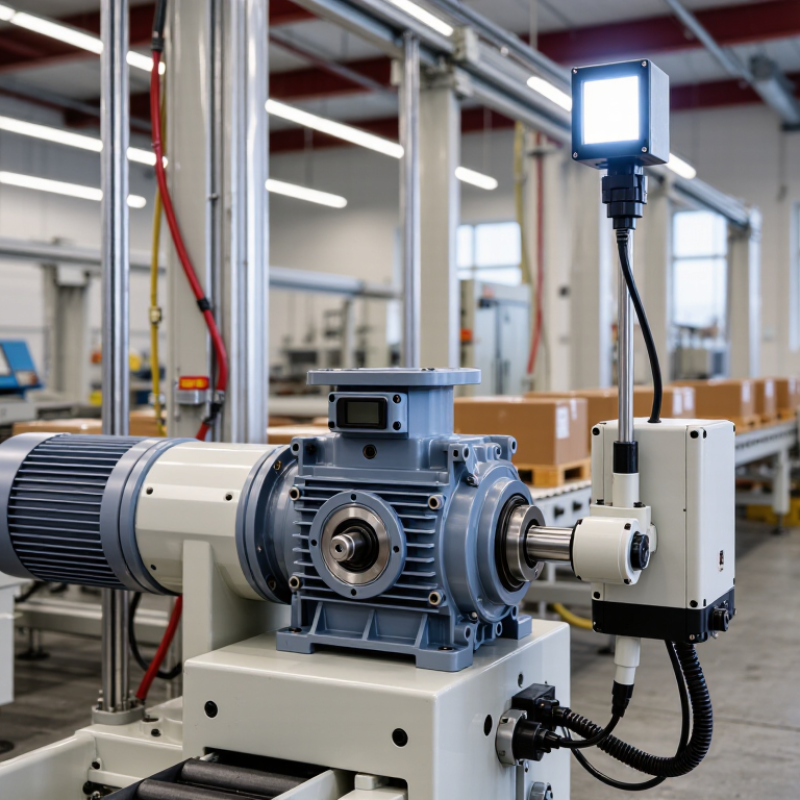
How to Choose a Gear Drive Motor for Your Application?

Define the Application’s Load, Speed, and Operating Conditions

How to Choose a Gear Drive Motor for Your Application?

Choosing a gear drive motor starts with a clear description of the application. Define the load before comparing motor specifications. Measure the continuous load, peak load, and starting resistance. A conveyor carrying 40 kilograms may need much more torque during startup. Include friction, incline, shock, and changing product weight. Do not rely on nominal load alone. It often hides the hardest moment.

Speed requirements deserve equal attention. Record the desired output speed, acceptable variation, and acceleration time. A motor that runs fast enough may still respond poorly under load. Calculate required output torque, then check motor power and gear ratio together. I have found that small speed errors can reduce positioning accuracy over long cycles. That assumption should be tested. Use actual operating data when possible, not only catalog estimates.

Operating conditions can change the selection completely. Note duty cycle, ambient temperature, humidity, dust, washdown, vibration, and installation position. A motor inside a warm enclosure may need more cooling than testing reveals. Check whether the seals, insulation, and gear materials suit the environment. Allow for frequent starts and reversals. They create extra heat. Keep a margin, but avoid excessive oversizing, which can reduce efficiency and control quality. My early selections were sometimes too conservative. Later temperature measurements showed the extra margin was unnecessary. Recheck assumptions after a trial run.

Match Motor Torque and Gear Ratio to the Required Output

How to Choose a Gear Drive Motor for Your Application?

Matching motor torque and gear ratio to the required output is the heart of gear drive selection. Start with the load, not the motor catalog. Measure the output torque, speed, and starting resistance under real operating conditions. A conveyor moving a loaded box may need far more torque during startup than during steady travel.

Use this basic relationship: output torque equals motor torque multiplied by gear ratio and efficiency. If a motor produces 2 Nm, a 20:1 gearbox may deliver about 34 Nm at 85% efficiency. The output speed will drop by roughly the same ratio. Allow extra capacity for friction, shock loads, and repeated starts. A service factor between 1.25 and 1.5 is often practical, but harsh machinery may require more.

Do not overlook thermal limits. A motor can meet the torque calculation yet overheat during continuous operation. Check duty cycle, ambient temperature, shaft orientation, and available cooling. I once selected a compact drive using peak torque alone. It worked on the test bench, but stalled after several hours of cycling. That mistake showed me the value of checking continuous torque and gearbox efficiency together. Real loads are rarely perfect. Measure them when possible, then review the calculation with a qualified engineer before final installation.

Select the Appropriate Gearbox Type and Motor Technology

Choosing a gear drive motor starts with the gearbox, not the motor label. Match the gearbox type to the motion, load, and available space. Spur gearboxes suit simple, cost-sensitive mechanisms with moderate torque. Helical gearboxes run more quietly and handle continuous loads efficiently. Worm gearboxes provide high reduction ratios and may resist back-driving, but their efficiency can drop during long operating cycles. Planetary gearboxes offer high torque density for compact machines, although their cost and setup demands are higher.

Motor technology matters just as much. Brushed DC motors are practical for basic speed control, but brush wear limits service life. Brushless DC motors support longer duty cycles and lower maintenance. AC induction motors remain reliable for fixed-speed industrial equipment. Servo motors are better when the application needs accurate positioning, rapid acceleration, and feedback. Check rated torque, peak torque, duty cycle, voltage, control method, and thermal limits together. A motor that looks powerful may still overheat in a small enclosure.

Tips: Measure the real load, including startup resistance and sudden impacts. Leave a reasonable service factor, but avoid excessive oversizing. It increases cost and can reduce control quality. Check shaft alignment carefully; small errors create noise and bearing stress. In field testing, designers often focus on maximum torque and overlook heat, backlash, or stopping behavior. That mistake is easy to make. Recheck the selection under the worst operating conditions, because laboratory performance rarely tells the whole story.

How to Choose a Gear Drive Motor for Your Application? - Select the Appropriate Gearbox Type and Motor Technology
Application Requirement Recommended Gearbox Type Suitable Motor Technology Typical Reduction Ratio Typical Efficiency Typical Output Speed Key Selection Factors
Low-cost conveyors and general material handling Helical or parallel-shaft helical gearbox Three-phase induction motor; inverter-duty motor when variable speed is required 5:1 to 40:1 90% to 97% 35 to 350 rpm Continuous duty, starting torque, belt speed, duty cycle, mounting position, and service factor
Compact machinery, packaging equipment, and right-angle drives Worm gearbox Single-phase capacitor motor for light duty or three-phase induction motor for industrial duty 10:1 to 100:1 50% to 90% 10 to 175 rpm Low initial cost, compact right-angle layout, heat dissipation, duty cycle, and possible back-driving
High-torque conveyors, mixers, hoists, and heavy-duty machinery Helical-bevel gearbox Three-phase induction motor with variable-frequency drive or soft starter 8:1 to 200:1 90% to 98% 5 to 220 rpm Shock loads, peak torque, thermal capacity, radial and axial loads, braking, and mounting strength
High precision positioning and repeatable motion Planetary gearbox Permanent-magnet servo motor with encoder and servo drive 3:1 to 100:1 94% to 98% 10 to 1,500 rpm Backlash, torsional stiffness, acceleration, positioning accuracy, reflected inertia, and peak torque
Small appliances, office equipment, and battery-powered mechanisms Planetary or spur gearbox Brushed DC motor or brushless DC motor with electronic commutation 5:1 to 200:1 65% to 92% 5 to 1,000 rpm Supply voltage, battery capacity, noise, compact size, control method, and expected operating life
Washdown, food-processing, and corrosive environments Stainless-steel helical or helical-bevel gearbox Sealed three-phase induction motor or brushless motor with suitable ingress protection 5:1 to 100:1 88% to 97% 10 to 350 rpm Ingress protection, corrosion resistance, hygienic design, seal material, cleaning chemicals, and drainage
Variable-speed fans, pumps, and energy-sensitive systems Helical gearbox or direct-drive arrangement where feasible High-efficiency induction motor with variable-frequency drive or permanent-magnet motor 3:1 to 30:1 90% to 98% 50 to 1,750 rpm Part-load efficiency, speed range, cooling at low speed, harmonics, noise, and energy consumption
Applications requiring self-locking or resistance to reverse motion Worm gearbox, subject to load and safety verification Induction motor with an electromagnetic brake when controlled stopping is required 20:1 to 100:1 50% to 85% 10 to 90 rpm Helix angle, load inertia, lubrication, temperature, braking distance, and confirmation that self-locking is not being used as the only safety function
Selection notes: Final sizing should be based on required output torque, output speed, starting and peak loads, duty cycle, ambient temperature, service factor, allowable radial and axial loads, installation orientation, and required protection rating. Efficiency, speed, and ratio ranges are typical engineering values and vary with gearbox size, ratio, lubrication, load, and operating conditions. For torque estimation, use Torque (N·m) = 9,550 × Power (kW) ÷ Speed (rpm).

Evaluate Mounting, Duty Cycle, Efficiency, and Environmental Protection

How to Choose a Gear Drive Motor for Your Application?

Evaluate Mounting, Duty Cycle, Efficiency, and Environmental Protection

A gear drive motor should fit the machine, not merely the catalog. Start with mounting space, shaft orientation, and available support points. Check whether the motor works horizontally, vertically, or at an angle. Misaligned mounting can increase noise, vibration, and bearing wear. In field installations, a few millimeters of clearance often prevent difficult maintenance later.

Duty cycle matters more than peak power alone. Record operating time, starts per hour, load changes, and stopping frequency. A motor running continuously needs different thermal capacity from one operating for ten seconds. Efficiency also affects heat, energy use, and service life. However, calculated efficiency may not match real conditions. Poor alignment, oversized gearing, or frequent overloads can change the result. Test the motor under a realistic load when possible.

Tips: Match the motor’s rated torque to the actual load, then allow a sensible service margin. Avoid excessive oversizing. It can reduce efficiency and increase cost. For dusty, wet, or chemical areas, inspect the required protection rating, seals, cable entries, and surface materials. Temperature extremes deserve attention too. A cold warehouse and a hot enclosure create different lubrication problems. Review the manufacturer’s test data, installation instructions, and maintenance intervals before approval. Record your assumptions; they may need revision after commissioning.

Verify Compatibility, Safety Standards, Controls, and Maintenance Needs

Choosing a gear drive motor starts with compatibility, not price. Record the load torque, starting torque, speed range, duty cycle, shaft position, and available voltage. A conveyor carrying wet cartons may need sealed housings, corrosion-resistant fasteners, and an enclosure suited to frequent washdown. Check mounting dimensions carefully. A small mismatch can create vibration, noise, or premature bearing failure.

Safety standards must match the machine and installation location. Review guarding, grounding, thermal protection, emergency stopping, and local electrical requirements with a qualified engineer. The motor should work reliably with its controller, sensors, relays, and overload protection. Confirm whether the control system needs variable speed, soft starting, reverse operation, or precise positioning. Never assume a motor accepts every drive signal. That mistake can damage insulation or cause unexpected movement.

Maintenance needs often reveal the better choice. Examine lubrication intervals, oil leakage risks, seal availability, inspection access, and replacement procedures. Keep a record of operating temperature, unusual sounds, and current draw. These details help identify trouble before failure. I once underestimated dust exposure near a packaging line and selected inadequate sealing. The motor ran well at first, then needed early replacement. That experience changed my checks. Leave service clearance around the gear unit, and specify spare seals, bearings, and connectors before installation. Small oversights remain expensive.

FAQS

What should I measure before choosing a gear drive motor?

Measure continuous load, peak load, starting resistance, speed, acceleration time, and operating temperature. A conveyor carrying 40 kilograms may need much more torque during startup. Do not trust nominal load alone.

How do I calculate required output torque?

Use motor torque, gear ratio, and gearbox efficiency together. Output torque equals motor torque multiplied by ratio and efficiency. For example, 2 Nm with a 20:1 ratio and 85% efficiency gives about 34 Nm. Leave extra capacity for friction and shocks.

Why is starting torque important?

Starting resistance can exceed running resistance by a wide margin. Inclines, friction, sudden impacts, and heavy products increase the demand. The difficult moment matters most.

How should I match gear ratio and output speed?

A higher ratio usually increases torque and reduces output speed. Record the required speed and acceptable variation first. Small speed errors may reduce positioning accuracy over long cycles. That assumption needs testing.

Which gearbox type suits different applications?

Spur gearboxes suit simple mechanisms with moderate torque and limited budgets. Helical gearboxes support quieter, continuous operation. Worm gearboxes provide high reduction but may lose efficiency during long cycles. Planetary gearboxes offer high torque in compact spaces.

Which motor technology should I consider?

Brushed motors suit basic speed control but require brush maintenance. Brushless motors support longer duty cycles with less maintenance. Induction motors work well for fixed-speed equipment. Servo motors suit accurate positioning, fast acceleration, and feedback.

Can a motor meet torque requirements and still overheat?

Yes. Continuous torque, duty cycle, cooling, and ambient temperature also matter. Frequent starts and reversals create extra heat. A compact drive may pass a short test but stall after several hours. I have made that mistake.

What environmental details affect motor selection?

Check humidity, dust, washdown, vibration, temperature, enclosure space, and installation position. Seals, insulation, and gear materials must suit the surroundings. A warm enclosure may need more cooling than a bench test suggests.

Is oversizing the motor always safer?

No. Excessive oversizing increases cost and may reduce efficiency or control quality. Use a reasonable service factor, often between 1.25 and 1.5. Harsh machinery may need more. Measure again after trial operation.

Conclusion

Choosing the right Gear Drive Motor begins with a clear understanding of the application. Identify the required load, output speed, starting conditions, operating hours, and environmental factors such as temperature, moisture, dust, or chemical exposure. Use these details to calculate the necessary output torque and select a suitable gear ratio, allowing the motor to deliver reliable performance without excessive strain or overheating.

Next, compare gearbox designs and motor technologies according to the application’s precision, noise, efficiency, and space requirements. Confirm that the mounting arrangement, duty cycle, service factor, and protection rating are appropriate for the installation. It is also important to verify voltage, control compatibility, safety requirements, and maintenance access before making a final decision. A well-matched Gear Drive Motor should provide stable operation, efficient power transmission, manageable maintenance, and dependable service throughout its expected operating life.

Aria

Aria

Aria is a dedicated marketing professional with a deep passion for innovative strategies and a keen understanding of our company's product offerings. With a wealth of experience in the industry, Aria excels at crafting engaging content that highlights the unique features and benefits of our......