How to Choose the Right Low Voltage Gear Motor?

Time:2026-10-13 Author:Ethan
0%

Choosing the right Low Voltage Gear Motor begins with understanding the machine, not the catalogue. A conveyor, medical actuator, packaging line, or compact lifting device may require completely different performance. Start by recording the load, speed, duty cycle, installation space, and available voltage. Measure twice. A motor that looks suitable on paper may stall when starting under load.

Torque deserves careful attention, especially during acceleration and repeated stopping. Calculate the required output torque, then add a sensible safety margin without oversizing the motor unnecessarily. Excess capacity can increase cost, heat, and energy use. Check the gearbox ratio, rated speed, shaft arrangement, mounting method, and allowable radial load. Noise and vibration also matter in offices, laboratories, and customer-facing equipment. Small details become expensive later.

Real-world experience shows that environmental conditions often change the selection. Dust, moisture, temperature, and limited ventilation can shorten service life. Confirm the motor’s protection rating and cooling requirements with the manufacturer’s technical documentation. Ask about testing, quality control, spare parts, and warranty support. Reliable suppliers should explain their calculations, not simply recommend the largest unit. That said, every application has unknowns. Actual friction may exceed estimates, and operating habits may change. Prototype testing under realistic conditions remains valuable. A careful choice balances torque, efficiency, durability, control compatibility, and total ownership cost. The best Low Voltage Gear Motor is not merely the strongest option; it is the one that performs consistently within the machine’s real operating demands.
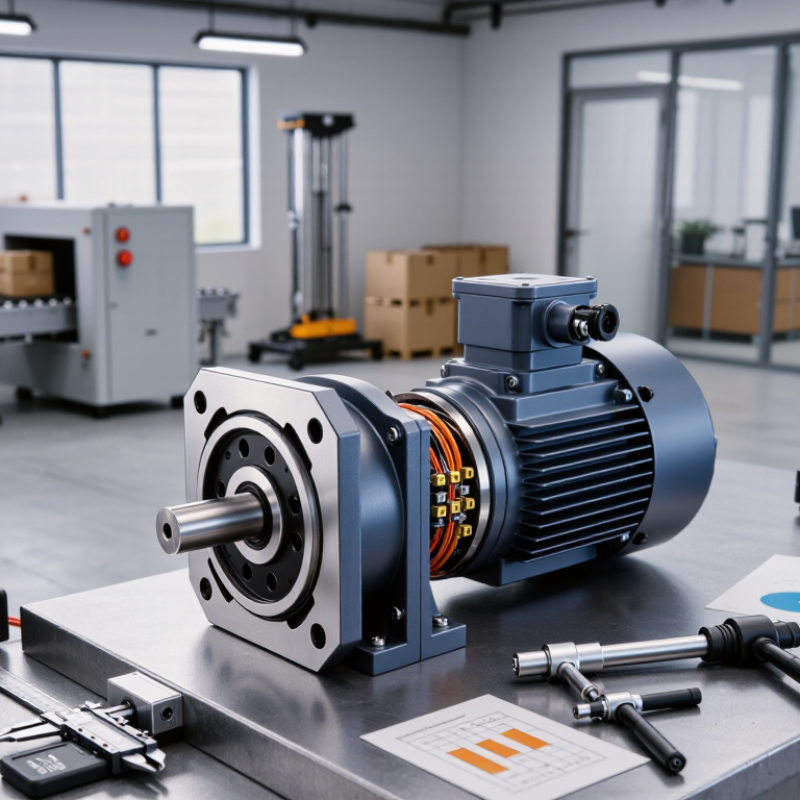
How to Choose the Right Low Voltage Gear Motor?

Define the Application Requirements for a Low Voltage Gear Motor

How to Choose the Right Low Voltage Gear Motor?

Define the application before comparing low voltage gear motors. Record the required output speed, continuous torque, peak torque, starting load, and operating hours. A conveyor moving 40 kilograms needs different sizing from a valve actuator moving intermittently. Include the gearbox ratio and efficiency. Small errors here can create overheating, slow movement, or early tooth wear.

Voltage and current must match the available power supply and controller. IEC 60038 defines common low-voltage supply values, but real installations may experience voltage drops. Check the motor’s rated voltage, starting current, and allowable temperature rise. Duty type matters too. A motor running ten minutes per hour should not be selected like one running continuously.

The International Energy Agency reports that electric motor systems consume about 53% of global electricity, making efficient sizing an important engineering decision. Bigger is not always safer.

Examine the environment closely. Dust, moisture, washdown exposure, ambient temperature, noise limits, and mounting position affect the enclosure and lubricant choice. Ask whether the load can reverse, stop suddenly, or back-drive the gearbox. ISO 20816 vibration guidance can support condition checks during commissioning.

Keep a safety margin, but avoid excessive oversizing. It increases cost and may reduce efficiency. A clean calculation is useful. It is not perfect. Recheck the real load after installation, because friction and impact often differ from the original estimate.

Match Motor Voltage, Torque, Speed, and Power to the Load

How to Choose the Right Low Voltage Gear Motor?

Match the motor voltage to the actual power supply, not the label on the machine. A 24 V motor connected to a weak battery may lose speed under load. Measure voltage at the motor terminals during startup. This small check often reveals the real problem. The U.S. Department of Energy reports that motor systems use more than 70% of electricity in U.S. manufacturing. Efficiency deserves attention, even in compact equipment.

24 V
Check voltage under load

Calculate load torque before selecting the gearbox. Use

T = 9550P/n

where T is torque in newton-metres, P is power in kilowatts, and n is speed in revolutions per minute. Add friction, incline, acceleration, and a practical safety margin. A conveyor lifting 20 kilograms needs more torque than one moving the same mass horizontally. Startup torque can be several times running torque.

Application fit
Speed, torque & efficiency

Speed must fit the application, not just the motor’s rated value. A gearbox may reduce speed while increasing output torque, but losses remain. Check efficiency, duty cycle, permissible radial load, and thermal limits. IEC 60034-30-1 defines motor efficiency classes, although the complete gear motor may perform differently. The International Energy Agency has reported that electric motor systems consume roughly half of global electricity. That figure makes careful sizing worthwhile. My calculation may still miss a jam or cold-start condition, so prototype testing under the harshest expected load remains necessary.

Select the Gearbox Type and Transmission Ratio

How to Choose the Right Low Voltage Gear Motor?

Choosing the gearbox type is as important as selecting the motor voltage. Spur gearboxes suit simple, compact mechanisms with moderate torque and low cost. Helical gearboxes run more quietly and usually provide smoother operation. Planetary gearboxes handle higher torque in a smaller package, but they often cost more. Worm gearboxes offer high reduction and useful holding ability, though their efficiency can be lower. The best choice depends on load direction, noise limits, available space, and duty cycle.

Transmission ratio controls output speed and available torque. Use this basic relationship: output speed equals motor speed divided by the gear ratio. For example, a 3,000 rpm motor with a 30:1 gearbox delivers about 100 rpm before efficiency losses. Higher ratios increase torque, but they may reduce speed and create more heat. Check starting torque, repeated stops, shock loads, and continuous running time. A theoretical ratio can look perfect on paper, yet the motor may struggle during startup. I have found that real loads are rarely as gentle as early calculations suggest.

Tips: Measure the required output speed under load. Leave a practical torque margin. Check gearbox efficiency. Test for noise and backlash. Do not ignore mounting position. If the application reverses often, confirm that the gearbox tolerates frequent direction changes. A small prototype test can reveal vibration, heat, or unexpected backlash before production begins.

How to Choose the Right Low Voltage Gear Motor? - Select the Gearbox Type and Transmission Ratio

Gearbox Type Typical Reduction Ratio Typical Efficiency Output Speed at 3,000 rpm Input Torque Characteristics Recommended Applications Main Advantages Important Limitations
Spur Gearbox 3:1 to 30:1 Approximately 80%–95% 100–1,000 rpm Moderate torque multiplication with relatively low starting resistance. Small conveyors, document feeders, battery-powered mechanisms, vending equipment and light automation. Compact, economical and generally efficient at low-to-moderate reduction ratios. Gear noise increases with speed; limited suitability for very high torque or high shock loads.
Helical Gearbox 3:1 to 100:1 Approximately 90%–97% per stage 30–1,000 rpm High torque capacity with smooth and comparatively quiet power transmission. Industrial conveyors, packaging machines, material-handling systems and continuous-duty equipment. High efficiency, good load capacity, quiet operation and long service life when properly lubricated. Usually more expensive and may require greater installation space than a spur gearbox.
Planetary Gearbox 3:1 to 100:1 Approximately 90%–97% per stage 30–1,000 rpm Very high torque density, strong radial load capability and low backlash in precision versions. Robotics, servo positioning, medical equipment, AGVs and compact high-load drives. High power density, compact construction, balanced load sharing and strong torsional stiffness. Higher cost and more demanding manufacturing requirements; not always necessary for simple drives.
Worm Gearbox 10:1 to 100:1 or higher Approximately 40%–90% 30 rpm or lower at high ratios High reduction in one stage and strong holding behavior; torque capacity depends heavily on lubrication and thermal conditions. Gates, lifts, indexing tables, small hoists and mechanisms requiring a large reduction ratio. Simple layout, high reduction ratio and potentially self-locking behavior at selected ratios. Lower efficiency, greater heat generation and possible back-driving; self-locking must never be assumed without verification.
Bevel Gearbox 2:1 to 100:1 Approximately 85%–96% 30–1,500 rpm Efficient torque transmission through a 90-degree direction change. Right-angle conveyors, packaging lines, automated machinery and equipment with restricted mounting space. Changes the drive direction while retaining good efficiency and useful torque capacity. Typically more complex and costly than a straight-line spur or helical arrangement.
Cycloidal Gearbox 10:1 to 100:1 Approximately 80%–95% 30–300 rpm High shock-load resistance and high torque capacity with low wear under demanding conditions. Robotics, indexing equipment, heavy-duty positioning systems and applications with frequent starts and stops. Resists impact loads, offers high reduction in a compact package and can provide low backlash. May produce more vibration or noise than a high-quality helical or planetary unit and can cost more.

Ratio selection guide: Calculate the required ratio using Transmission Ratio = Motor Speed ÷ Required Output Speed. For example, a 3,000 rpm motor requiring 150 rpm at the gearbox output needs an approximately 20:1 reduction ratio.

Selection reminder: Verify output torque, duty cycle, starting torque, shock load, allowable radial and axial loads, ambient temperature, mounting orientation, noise limits and available battery voltage before finalizing the gear motor. Efficiency and ratio ranges are typical engineering values and vary with gearbox design, size, lubrication and operating conditions.

Evaluate Efficiency, Duty Cycle, Size, and Mounting Options

How to Choose the Right Low Voltage Gear Motor?

Efficiency and duty cycle should guide your selection before physical size. A motor running near its rated load usually wastes less energy than an oversized unit. Check voltage, output speed, torque, and gear ratio under real operating conditions. Continuous duty creates more heat than short, repeated movements. Review the duty cycle carefully, including starts per hour and rest periods. I have seen motors pass a basic test, then overheat inside a poorly ventilated enclosure. Manufacturer curves are useful, but measured temperature is more trustworthy.

Size the motor around the available space and required output, not appearance. Confirm shaft diameter, keyway details, cable direction, and gearbox clearance. A compact motor may fit the frame but lack enough starting torque. Mounting options also affect alignment. Flange, foot, and face mounts each need accurate bolt spacing and a rigid support. Small misalignment can produce noise, vibration, and premature bearing wear. This is easy to underestimate.

Tips: Measure the mounting area with a ruler before ordering. Leave room for airflow and maintenance. Test the motor with the actual load, not a light substitute. Record current, temperature, and speed during operation. A simple test may reveal assumptions that calculations miss.

Compare Safety Features, Environmental Ratings, and Maintenance Needs

Choosing a low-voltage gear motor requires more than matching voltage and torque. Safety, environmental protection, and maintenance determine whether it survives real work. The U.S. Department of Energy’s Industrial Motor Systems Market Assessment reports that motor-driven equipment uses about 69% of U.S. manufacturing electricity. Efficiency matters, but an efficient unsafe motor is still a poor choice.

Start with guarded moving parts, overload protection, thermal sensing, secure grounding, and controlled stopping. Ask for test evidence, not a sales promise. IEC 60529 rates IP protection: IP65 is dust-tight and protected against water jets, while IP67 adds temporary immersion protection. These ratings describe the enclosure, not every connector or cable gland. That distinction is easy to miss. Low voltage reduces shock risk, but it does not remove electrical hazards.

Site conditions should guide the rating. Dust near conveyors, washdown spray, condensation, and heat each demand different protection. Check duty cycle, starts per hour, brake wear, gear oil, seal condition, and bearing noise. A U.S. DOE motor-system sourcebook says system optimization can often save 5–15% energy. Still, inspection intervals are frequently guessed. I would record temperature, vibration, and current under normal load, then compare trends monthly. One imperfect assumption remains: IP67 may still fail when a poorly fitted gland lets water reach the terminals. The gland deserves the same attention as the gearbox.

How to Choose the Right Low Voltage Gear Motor?

Compare safety features, environmental ratings, and maintenance needs before selecting a low-voltage gear motor for your application.

How to read the chart: The first IP digit indicates protection against solid objects and dust, while the second digit indicates protection against water. IP44 protects against objects larger than 1 mm and water splashes. IP54 is dust-protected and splash-resistant. IP65 is dust-tight and protected against water jets. IP67 is dust-tight and suitable for temporary immersion up to 1 metre for up to 30 minutes under IEC 60529 test conditions.

Safety and maintenance considerations: Select a motor with thermal overload protection, suitable grounding, correctly rated low-voltage controls, and a brake when load-holding or stopping performance requires it. Higher IP protection can reduce contamination-related failures, but it does not eliminate routine inspections. Check seals, cable glands, connectors, mounting bolts, gearbox lubrication, abnormal noise, vibration, and temperature according to the equipment manufacturer's maintenance instructions.

FAQS

What information should I collect before choosing a low voltage gear motor?

Record output speed, continuous torque, peak torque, starting load, and operating hours. Include gearbox ratio and estimated efficiency. A 40-kilogram conveyor needs different sizing from an intermittent valve movement. Small mistakes matter. Recheck the real load after installation.

How do I match the motor voltage to the power supply?

Match the motor’s rated voltage with the measured supply voltage. Check voltage at the motor terminals during startup. A weak battery can reduce speed, even when its label looks correct. Also record starting current and temperature rise. The label is not enough.

How can I calculate the required output torque?

Use T = 9550P/n, where torque is in newton-metres. Power is measured in kilowatts, and speed is measured in revolutions per minute. Add friction, acceleration, incline, and a practical safety margin. A conveyor lifting 20 kilograms needs more torque than a horizontal conveyor. My estimate may still miss a jam.

Why does starting torque need special attention?

Starting torque can be several times higher than running torque. Heavy loads, cold grease, and sudden acceleration increase this demand. Check the motor curve and gearbox limit. Test the hardest expected condition. Normal running is not enough.

How does duty cycle affect motor selection?

A motor running continuously creates more heat than one operating briefly. Record starts per hour, running time, and rest periods. Ten minutes of operation each hour differs greatly from continuous service. Measure temperature inside the enclosure. Basic testing can mislead.

What environmental conditions should I examine?

Check dust, moisture, washdown exposure, ambient temperature, and noise limits. Mounting position can affect lubrication and cooling. Consider whether the load reverses, stops suddenly, or back-drives the gearbox. A dusty room may need stronger protection. Clean surroundings can still hide heat problems.

How should I check size and mounting compatibility?

Measure the mounting area with a ruler before ordering. Confirm shaft diameter, keyway details, cable direction, bolt spacing, and gearbox clearance. Leave room for airflow and maintenance access. A compact motor may fit physically but lack starting torque. Small misalignment causes vibration and bearing wear.

Is choosing a larger motor always safer?

No. Oversizing can increase cost, reduce efficiency, and create unnecessary starting current. Select enough capacity for the real load and reasonable variation. Avoid choosing by appearance alone. Bigger is not always better. Prototype testing remains valuable.

Conclusion

Choosing the right Low Voltage Gear Motor begins with a clear understanding of the application. Identify the required load, operating environment, movement pattern, available power supply, and expected service life. Then match the motor’s voltage, torque, speed, and power output to the actual load, allowing enough margin for startup demands and changing conditions. Selecting an appropriate gearbox type and transmission ratio is equally important, as these factors determine output speed, torque multiplication, smoothness, and overall performance.

Before making a final decision, evaluate efficiency, duty cycle, physical size, and mounting options to ensure the motor can operate reliably within the available space and workload. Safety features, environmental protection ratings, noise levels, and maintenance requirements should also be considered. A suitable Low Voltage Gear Motor should withstand the application’s temperature, dust, moisture, and vibration conditions while remaining easy to inspect and service. Careful comparison of these factors helps achieve dependable operation, controlled energy use, and longer equipment life.

Ethan

Ethan

Ethan is a seasoned marketing professional with a deep expertise in our company's innovative product line. With a passion for sharing knowledge and insights, he takes the lead in regularly updating our corporate blog, where he explores industry trends, product features, and effective marketing......