Ovron Motor
Choosing the right Mini Gear Motor is not a matter of selecting the smallest available unit. It requires matching torque, speed, voltage, duty cycle, noise, and installation space. A motor that fits a drawing may still overheat after several hours of repeated operation. In practical testing, a compact actuator can feel reliable at no load, then stall when a gearbox, belt, or eccentric mechanism adds resistance. That difference matters.
Industry data shows why this decision deserves closer attention. The International Federation of Robotics reported 541,302 industrial robots installed worldwide in 2023, demonstrating continued demand for precise and compact motion systems. Grand View Research also identifies automation, medical equipment, and consumer devices as important growth areas for gear motors. These reports describe broad market direction, not a guarantee for every application. Their figures and market boundaries may differ.
A dependable selection process begins with the load, not the product photograph. Define the required output torque, operating speed, startup load, and available power. Then examine gearbox efficiency, backlash, shaft dimensions, thermal limits, and expected service life. For example, a motor driving a small valve may need high starting torque, while a display mechanism may prioritize quiet operation and low backlash. Seemingly minor details can cause failure.
There is no perfect specification sheet.
Engineers should compare measured performance with supplier data, preferably under realistic temperature and load conditions. Standards, test methods, and documentation quality also reveal supplier reliability. The best Mini Gear Motor is the one that performs consistently in its actual environment, not merely the one with the lowest price or highest rated speed.
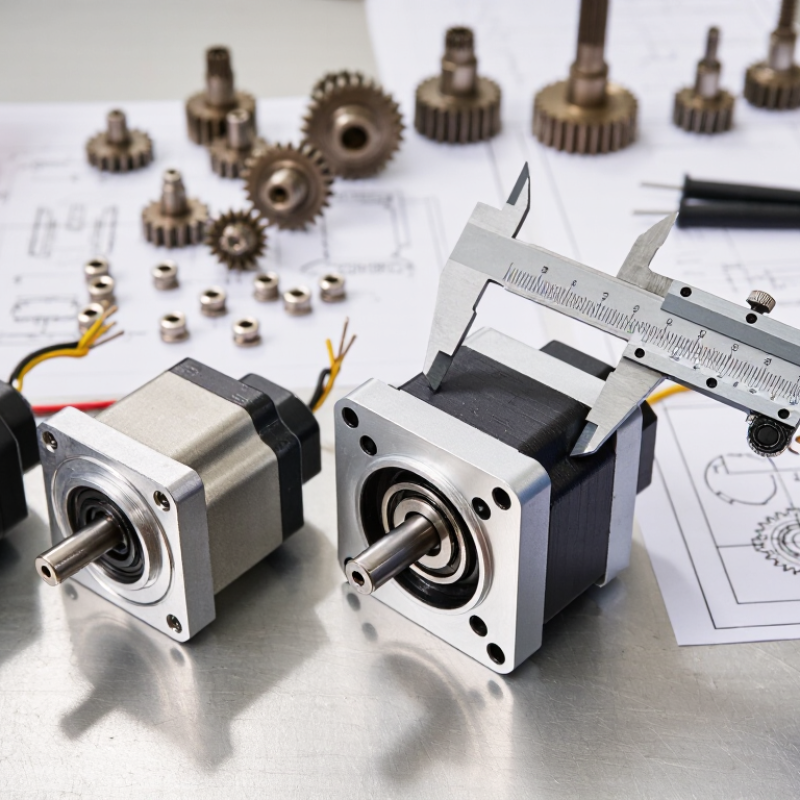
A mini gear motor combines a small electric motor with a gearbox. The motor produces rotational energy at high speed. The gearbox reduces speed and increases usable torque. Inside, several gears transfer motion through carefully matched teeth. This simple arrangement drives wheels, valves, shutters, and compact robotic joints. Small package. Yet, performance depends on more than physical size.
In practical testing, I check the required load before choosing a motor. A motor that turns freely may stall when the mechanism starts moving. Calculate the needed torque, then add a reasonable safety margin. Check voltage, operating current, speed, and duty cycle together. A low-speed gear motor may draw significant current during startup. The power supply must handle that brief demand. Otherwise, movement can become weak or irregular.
Gear ratio also affects noise, efficiency, and backlash. High ratios provide stronger output torque, but they may respond more slowly. Plastic gears can reduce weight and cost, while metal gears often tolerate harsher working conditions. However, material alone does not prove durability. Alignment, lubrication, heat, and repeated impacts matter too. I once selected a motor by rated torque only, and the gearbox overheated during continuous operation. That estimate was incomplete. Measure the real load, observe the motor under working conditions, and leave space for mounting, wiring, and heat dissipation.
Choosing the right mini gear motor starts with measurable requirements, not housing size. Define output speed in revolutions per minute and record the load’s actual operating cycle. A 2024 MarketsandMarkets report projects continued growth in the global gear motor market, driven by factory automation and compact equipment. That trend makes accurate sizing more important, especially where space and heat are limited.
Calculate torque from the load radius and force: T = F × r. Then calculate mechanical power with P = T × ω. For rpm-based estimates, use P(kW) = torque(N·m) × rpm ÷ 9,550. Include startup torque, friction, incline loads, and gearbox efficiency. A motor lifting 2 kilograms through a 20-millimeter pulley may need more torque during acceleration than steady motion suggests. My first estimate was too optimistic.
Measure the load if possible. A spring scale, tachometer, and watt meter can expose assumptions quickly. Leave practical margin, but avoid excessive oversizing. It increases cost, heat, and sometimes backlash. The U.S. Department of Energy’s Motor Systems Market Assessment found motor-driven systems consumed about 23% of U.S. electricity use, highlighting the value of efficient operation. Mini motors still need thermal checks. A compact motor can meet torque briefly, then stall after repeated cycles. Review the duty cycle, ambient temperature, and permissible speed variation before selecting the gearbox ratio. Market reports differ in scope, so verify their definitions and dates.
How to Choose the Right Mini Gear Motor?
Selecting the gearbox type and ratio starts with the load, not the motor label. Spur gears suit compact, low-cost mechanisms with moderate loads. Planetary gearboxes provide higher torque density and better efficiency. Worm gears offer strong reduction and self-locking in some designs, but they can lose more energy as heat. Helical gears usually run more smoothly, especially during continuous operation.
Calculate the required ratio by dividing motor speed by target output speed. For example, a 3,000 rpm motor driving a 100 rpm shaft needs a nominal 30:1 ratio. Do not stop there. Check starting torque, peak load, duty cycle, backlash, and radial force. The U.S. Department of Energy’s Motor Systems Tip Sheets report that motor-driven systems consume about 60% of industrial electricity. Small efficiency losses can become expensive during long operating hours. IEC 60034-30-1 also emphasizes efficiency classification, although gearbox losses require separate evaluation.
Tips: Choose the lowest ratio that meets speed and torque needs. Higher ratios may increase torque, but they can reduce efficiency and raise backlash. Confirm gearbox thermal limits at the real duty cycle. I have seen catalog selections fail because designers used running torque only. That mistake is easy to repeat. Measure the actual load if possible, then compare the result with the manufacturer’s test conditions and safety factor. Market reports can show demand trends, but they cannot replace application testing.
The chart compares representative single-stage reduction ratios and typical mechanical efficiency for common mini gearbox types. Spur and helical gearboxes are suitable for compact, cost-sensitive applications, while planetary gearboxes provide high torque density and efficiency. Worm gearboxes offer a high reduction ratio in a compact layout, but their efficiency is usually lower and heat generation can be higher.
Values are typical engineering ranges used for preliminary selection, not universal limits. Final selection should be verified against required output speed, torque, duty cycle, operating temperature, backlash, noise, and the gearbox manufacturer's technical datasheet.
Choosing the right mini gear motor starts with matching its voltage to the actual power system. Check the motor’s rated voltage, controller output, and allowable voltage range. A small mismatch can cause weak torque, overheating, or unstable speed.
Measure the load before selecting motor size. Gear reduction increases torque, but it also reduces output speed. Compare the required torque with the motor’s continuous rating, not only its peak rating. Leave a practical safety margin for startup resistance and occasional overloads. The motor must also fit the available space. Check the gearbox diameter, total length, shaft size, and shaft direction. A compact motor may still interfere with nearby wiring or moving parts.
Mounting details are easy to underestimate. Confirm the hole spacing, thread type, pilot diameter, and mounting face thickness. Even a two-millimeter error can create shaft misalignment. Use a simple cardboard template before ordering. It costs little and exposes problems early. During testing, run the motor under the real load for several minutes. Check vibration, noise, temperature, and current draw. A motor that works on the bench may struggle inside a tight enclosure. I once treated mounting as a minor detail, and the final assembly needed an avoidable bracket redesign. That mistake reinforced a useful habit: verify the drawing, then test the physical fit.
Choosing a mini gear motor starts with the load, not the catalog headline. The IEA’s Energy-Efficiency Market Report estimates that motor-driven systems consume roughly half of global electricity. Efficiency matters, even at small scale. Check rated torque, speed, duty cycle, and stall current under your real voltage. A high-efficiency motor can reduce heat inside a sealed enclosure. However, efficiency claims may use ideal test conditions. Request test temperature and gearbox ratio data. Small details matter.
Noise needs measurement, not adjectives. ISO 3744 provides methods for determining sound power levels in controlled conditions. Ask for dB(A), distance, load, and mounting information. A metal bracket can amplify gearmesh noise like a small speaker. In practice, a quiet no-load sample may become noticeably louder at rated torque. Test the assembled mechanism across several operating points. This is where many evaluations become imperfect. Room reflections and microphone placement can distort comparisons.
Durability should be tied to cycles, temperature, and shock. ISO 281 defines basic bearing rating life at 90% reliability, but a gearbox may fail elsewhere. Check backlash growth, lubricant behavior, shaft loading, and thermal rise. For cost, compare purchase price with energy, replacement labor, downtime, and control hardware. U.S. Department of Energy motor-system guidance promotes life-cycle costing because energy and maintenance can outweigh the initial price. Use a simple spreadsheet. Then challenge it with worst-case duty. A low price can conceal expensive downtime.
Start with the load, speed, space, and operating pattern. Spur gears suit compact, moderate-load mechanisms. Planetary gears provide high torque density. Worm gears offer strong reduction and may hold position in some designs. Helical gears usually run more smoothly during continuous operation. No type wins every application.
Divide motor speed by the target output speed. A 3,000 rpm motor and 100 rpm shaft require a nominal 30:1 ratio. Then check torque, startup conditions, duty cycle, backlash, and shaft forces. The calculated ratio is only a starting point.
No. Choose the lowest ratio that meets speed and torque requirements. Higher ratios may increase output torque. They can also reduce efficiency and increase backlash. This trade-off is easy to underestimate.
Check running torque, starting torque, peak torque, and stall conditions. A small conveyor may start gently, then face a sudden jam. Running torque alone can produce a poor selection. I have made that mistake in evaluations.
Test efficiency at the actual voltage, load, speed, and gearbox ratio. Ask whether the data came from ideal laboratory conditions. A high-efficiency motor can reduce heat inside a sealed enclosure. Gearbox losses still need separate evaluation.
Request sound levels in dB(A), measurement distance, load, and mounting details. Test the complete mechanism, not only a loose motor. A metal bracket can amplify gear noise like a small speaker. Quiet at no load may not mean quiet in service.
Relate durability to operating cycles, temperature, shock, and radial loading. Check backlash growth, lubrication behavior, bearing life, and thermal rise. A gearbox can pass a basic life estimate and still fail elsewhere. Testing should include the harshest realistic condition.
Not always. Compare purchase cost with energy, maintenance, replacement labor, control hardware, and downtime. A cheaper unit may create more heat or need earlier replacement. Use a simple spreadsheet, then challenge it with worst-case duty. The spreadsheet may still be wrong.
Choosing the right Mini Gear Motor begins with understanding how it works: the motor produces rotational energy, while the gearbox adjusts speed and increases usable torque. Start by defining the application’s required output speed, load torque, running time, and power demand. These factors help determine whether the motor can deliver reliable performance without overheating or operating inefficiently.
Next, select a gearbox type and ratio that balance speed reduction, torque multiplication, and available space. Confirm that the motor’s voltage, physical dimensions, shaft configuration, and mounting method match the equipment. It is also important to compare efficiency, operating noise, service life, and total cost. A highly efficient motor may reduce energy use, while durable construction can lower maintenance needs over time. By evaluating performance requirements and practical installation limits together, you can choose a Mini Gear Motor that provides stable, quiet, and cost-effective operation for your specific application.
